Table of contents

Common Types of Fender Damage: Causes, Severity, and When to Replace

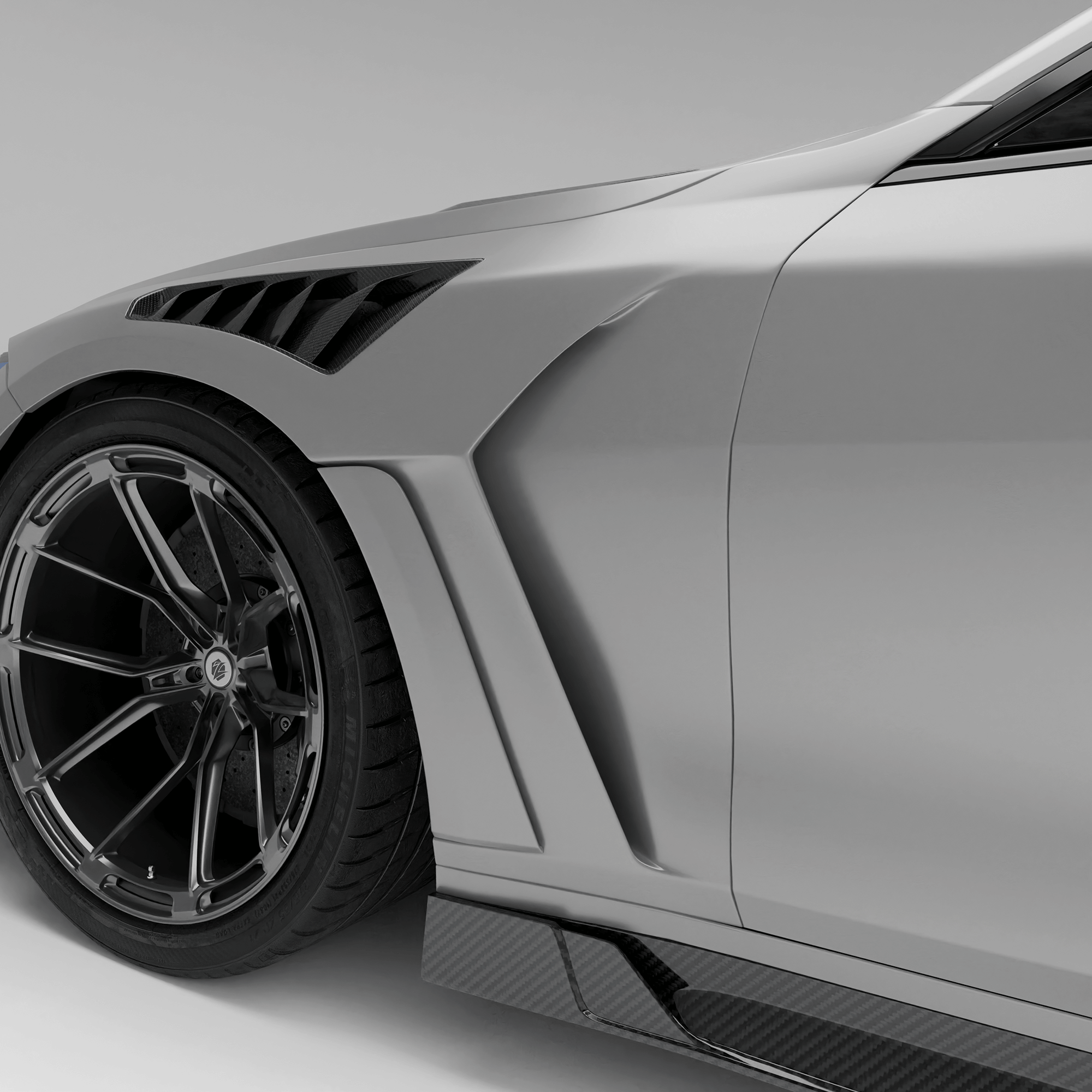
revozport car showing carbon fiber fender

Fender damage is one of the most common body issues drivers encounter. It can happen in a parking lot, during daily driving, or after a minor collision. But not all fender damage is equal—and not all of it needs to be repaired.

Some damage is purely cosmetic. Other damage affects panel alignment, wheel clearance, or long-term durability. In general, cracked, bent, rusted, or poorly aligned fenders are more likely to require replacement, while shallow dents and surface scratches are often cosmetic.

This guide breaks down the most common types of fender damage, explains what usually causes them, and helps you decide when repair is enough—and when replacing the fender is the smarter option, especially for performance-oriented or carbon fiber body setups.

Fender Damage on a race car

What Is Fender Damage and Why It Matters

A fender is the body panel that surrounds the wheel opening and protects nearby components from road debris, water, and impact. While it may look like a simple exterior part, a damaged fender can cause more than visual issues.

Fender damage matters because it can affect:

  • Appearance and resale value

  • Panel gaps and overall body alignment

  • Wheel and tire clearance

  • Airflow and balance, especially on performance vehicles

In more serious cases, a damaged fender can interfere with suspension movement or cause tire rubbing. That’s when a cosmetic issue turns into a functional problem.

The 4 Most Common Types of Fender Damage

Most fender damage falls into one of these four categories:

  1. Dents and dings

  2. Scratches and paint damage

  3. Cracks, bends, or distortion

  4. Rust and corrosion

Each type looks different, has different causes, and leads to different repair or replacement decisions.

Dent and Scratch Fender Damage

Dent and Scratch Fender Damage — Cosmetic or Structural?

Dents and scratches are the most common types of fender damage, especially in everyday driving.

Common causes include:

  • Parking lot impacts

  • Door swings in tight spaces

  • Shopping carts, bicycles, or low obstacles

  • Small road debris

Shallow dents and light scratches usually affect only appearance. If the fender keeps its shape and sits flush with surrounding panels, repair may be optional.

However, deeper dents—especially near the wheel arch or mounting edges—can distort the panel. Scratches that cut through paint and expose the underlying material can also lead to long-term issues.

When replacement becomes the better choice:

  • The fender no longer aligns cleanly

  • Tire clearance is affected

  • Repairs don’t hold over time

In these cases, replacing the fender often delivers better results than repeated cosmetic fixes.

A white car with fender which suffers cracked, bent, or distorted

Cracked, Bent, or Distorted Fenders After Impact

More serious fender damage usually comes from impact rather than light contact.

Typical causes include:

  • Side-swipe collisions

  • Angled impacts at intersections

  • Striking curbs or potholes at speed

Unlike dents, cracks and bends indicate that the fender has lost structural integrity. The panel may flex, warp, or sit unevenly even after attempted repair.

This is especially common with plastic or composite fenders, which can become brittle over time, and with metal panels that crease or deform under force.

Why repair is often not enough:
Once a fender is cracked or bent, repairs rarely restore original fitment. For moderate to severe impact damage, direct-fit replacement panels—such as side fenders from Revozport—are usually the more durable and predictable solution, particularly on performance builds.

A car with fender which suffers rust and corrosion damage

Rust and Corrosion — Damage That Gets Worse Over Time

Rust is most common on metal fenders, but corrosion can also affect mounting points and inner structures.

How rust typically starts:

  • Scratches that expose bare metal

  • Long-term exposure to moisture or road salt

  • Poorly repaired paint damage

Rust spreads beneath the paint surface. By the time bubbling or discoloration appears, internal damage is often already advanced.

When replacement makes more sense than repair:
If corrosion reaches mounting areas or inner edges, patch repairs are rarely cost-effective. Replacing the fender—often with corrosion-resistant materials like carbon fiber—provides a longer-lasting solution.

Can Fender Damage Affect Fitment or Safety?

Yes. Fender damage is not always limited to the panel itself.

Warning signs include:

  • Uneven body gaps

  • Tire rubbing during turns or suspension compression

  • Fender edges contacting wheels

  • Panels that no longer line up with the hood or doors

Many drivers ignore these signs until drivability issues appear. Poor fitment can accelerate tire wear and lead to additional damage over time.

Revozport workers replacing a fender

Fender Repair vs Replacement — How to Decide

Choosing between repair and replacement depends on damage severity and long-term goals.

Repair is usually reasonable when:

  • Dents are shallow and away from mounting points

  • Scratches are limited to clear coat or paint

  • Panel shape and alignment remain intact

Replacement is usually recommended when:

  • The fender is cracked, bent, or warped

  • Rust affects structural or mounting areas

  • Fitment issues remain after repair

  • You want consistent alignment on a performance build

Quick decision rule:

  • Cracks, bends, or rust near mounting points → replace

  • Repeated repairs that fail → replace

  • Performance or track builds → replacement often saves time and cost

For these situations, many owners choose carbon fiber replacement fenders and side fenders from brands like Revozport, which restore fitment while reducing weight.

What Fender Replacement Typically Involves

Fender replacement is more straightforward than many expect:

  • Removing the damaged panel

  • Test-fitting the replacement fender

  • Final alignment and installation

  • Paint or finish matching, if required

Proper fitment matters more than speed. A well-designed replacement fender should align cleanly with surrounding panels and maintain correct wheel clearance.

How to Prevent Common Fender Damage

While not all damage is avoidable, good habits reduce risk:

  • Leave extra space when parking

  • Use caution in narrow garages and driveways

  • Wash and inspect panels regularly

  • Address paint damage early

Replacing compromised fenders early can also prevent secondary issues later.

FAQs

Is small fender damage worth fixing?
Minor cosmetic damage may not need immediate repair unless resale value is a concern.

When does fender damage require replacement?
Cracks, bending, rust near mounting points, or poor fitment usually justify replacement.

Can fender damage affect tire clearance?
Yes. Distorted fenders can rub tires during turns or suspension travel.

Is replacing a fender better than repairing it?
For moderate to severe damage, replacement is often more durable and cost-effective.

Final Thoughts

Most fender damage fits into a few common categories, but the right response depends on severity—not appearance alone. Cosmetic issues can often be monitored, while structural damage should be addressed promptly.

When fender damage affects fitment, clearance, or long-term durability, replacement is often the smarter choice. Performance-focused brands like Revozport specialize in carbon fiber car parts, including side fenders, side skirts, and car hoods designed to restore alignment, reduce weight, and support clean, reliable body fitment.

Explore Our Full Range of Tuning Accessories

0 comments

Leave a comment

You Might Also Like To Read

What Is a Fender on a Car? Location, Purpose, and Key Differences Explained

April 28, 2026

What Is a Fender on a Car? Location, Purpose, and Key Differences Explained

If you are not fully sure what a car fender is, you are not alone. A fender is the body panel around the wheel area, usually the front side panel between the bumper and the door. It helps block mud, water, and road debris thrown up by the tire, and it also shapes the car’s outer body. Many drivers confuse a fender with a bumper, a wheel arch, or a quarter panel. This guide clears that up fast, shows you where the fender sits, explains what it does, and helps you tell it apart from the parts around it. What Is a Fender on a Car? A fender is the outer body panel around the wheel area, usually the front wheel-side panel rather than the bumper or the door itself. On most modern cars, when people say “fender,” they usually mean the front fender. In casual speech, some drivers also say “rear fender,” but in repair and parts language, that rear section is more often called the quarter panel instead. Some people also say “side fender,” but “front fender” is usually the more precise term. In most cases, “side fender” is just a looser way of referring to the wheel-side body area rather than a distinct technical part name. So the key idea is simple: a fender is the wheel-side outer body panel, and on most cars, people mean the front one. Where Is the Fender Located on a Car? You can usually find the fender on the front corner of the car, between the bumper, hood, and front door, surrounding the wheel opening. The easiest way to identify it is to follow the body panel above and slightly behind the front tire. If that panel meets the bumper at the front and the door at the rear, you are usually looking at the fender. This is also why fender damage often overlaps with nearby parts. A small front-corner hit can affect the fender, bumper edge, wheel liner, hood gap, or headlight alignment at the same time. Fender vs Bumper: What Is the Difference? A fender and a bumper are not the same part. The bumper sits at the very front or rear end of the car. Its main job is impact management in lower-speed contact. The fender sits beside the wheel area and mainly helps control debris, protect nearby surfaces, and shape the car’s outer side profile. A simple way to remember it is this: The bumper faces forward or backward The fender sits to the side near the wheel The bumper is impact-focused The fender is panel-and-coverage focused People mix them up because the front bumper and front fender meet at the same corner. After a small accident, both parts may be scratched, bent, or misaligned at the same time. Fender vs Quarter Panel: Are They the Same Part? No, not usually. A front fender and a quarter panel are different body sections. A front fender is usually the outer panel around the front wheel area. A quarter panel is the rear side body section around the back wheel. In casual speech, many people say “rear fender,” but in repair language, the rear section is often called the quarter panel instead. That difference matters because the parts are not always repaired or replaced the same way. A front fender is often more straightforward as a panel. A rear quarter panel is usually more integrated into the body shell, which can make repairs more complex and more expensive. If you are reading a body shop estimate or buying replacement parts, this is one of the most useful distinctions to understand. What Does a Car Fender Actually Do? A car fender helps block debris thrown outward by the tire and protects nearby body areas from that spray. That is the practical job most people do not notice until the panel is damaged or missing. As the wheel spins, it can throw water, mud, gravel, and road grime outward. The fender helps contain that mess and reduce what reaches the side of the car. It also protects surrounding areas by creating a body barrier around the wheel opening. Without that coverage, nearby surfaces would be more exposed to dirt, splash, and small debris. On top of that, a fender also plays a styling role. It helps define the width, shape, and visual line of the vehicle. On some cars, especially sportier models, the fender is a big part of the car’s stance and proportions. What Are Car Fenders Made Of? Car fenders can be made from steel, aluminum, plastic, fiberglass, or carbon fiber, depending on the vehicle and its purpose. On many regular passenger cars, steel is common because it is durable and cost-effective. Aluminum is also used on some vehicles to reduce weight. In some cases, plastic or composite materials are used for certain outer panels or trim-heavy designs. On enthusiast and performance builds, you may also see a carbon fiber fender or fiberglass replacement panel. These are often chosen for weight savings, styling, or wider-body fitment rather than simple factory replacement. The material matters, but fit, finish, and panel design matter just as much. A poorly made lightweight panel can create more problems than a well-made standard one. What Kinds of Fender Damage Are Most Common? The most common fender damage includes dents, scrapes, cracks, paint damage, and panel misalignment. Minor Damage You Often See Small Dents Scratches And Paint Scuffs Edge Rub Marks Stone Chips This kind of damage often happens in parking lots, tight garages, or light side contact. More Serious Fender Damage Cracks In Composite Panels Bent Mounting Areas Tire Rubbing From Deformation Misalignment Near The Hood Or Bumper Damage Around The Headlight Edge A fender can also look like the only damaged part when the real issue is bigger. That is why it helps to check nearby panels, mounting points, and wheel clearance before assuming it is only cosmetic. Can a Damaged Fender Be Repaired, or Does It Need to Be Replaced? A damaged fender can sometimes be repaired, but deeper bends, cracks, or fitment issues may make replacement the better choice. As a general rule, light dents, surface scratches, and minor cosmetic damage are more likely to be repairable. Sharp creases, cracked composite material, torn mounting points, or major misalignment often push the decision toward replacement. Usually Repairable Light Dents Paint Scratches Minor Surface Imperfections More Likely To Need Replacement Cracked Fiberglass Or Carbon Panels Torn Or Distorted Mounting Tabs Heavy Bends Near Panel Edges Poor Fit Around The Door, Hood, Or Bumper There is also a cost question. Sometimes a fender can technically be repaired, but the labor cost makes replacement the more practical choice. That is especially true when fit and panel shape matter. What Is a Fender Flare or Wide Fender? A fender flare is an added extension around the wheel opening, while a wide fender is a broader panel design that creates more tire coverage or a wider look. These are related, but not always identical. A fender flare is usually an add-on piece or molded extension around the wheel arch. A wide fender usually refers to a fuller panel shape that pushes the outer body farther outward. People add them for a few common reasons: To Cover Wider Tires To Create A More Aggressive Look To Match A Wider Track Setup To Change The Car’s Overall Stance This is also where performance body upgrades come in. If you are comparing factory-style replacement panels with a wider aero setup, browsing a specialist brand like Revozport can help you see how fender design changes both fitment and visual stance. What Is a Fender Bender? A fender bender is a minor car accident, usually a low-speed collision that causes light body damage rather than major structural damage. The phrase comes from the fact that fenders were once common damage points in small accidents. Today, a fender bender may involve the bumper, fender, quarter panel, or several panels together, but the phrase stayed in everyday language. So even though not every small accident bends a literal fender, the term still means a minor crash with limited damage. Frequently Asked Questions About Car Fenders Can you replace a front fender without replacing the bumper? Sometimes yes. If the bumper, brackets, and alignment points are still in good shape, the front fender can often be replaced on its own. Why is rear quarter panel damage often more expensive than front fender damage? Because a front fender is often a simpler outer panel, while a rear quarter panel is usually more integrated into the vehicle body. Are aftermarket fenders worth buying? They can be, but fitment, finish quality, and material matter more than the label alone. A cheap panel that fits badly can cost more in labor and frustration later. Can you drive with a damaged fender? Sometimes you can, but it depends on the damage. If the panel is loose, rubbing the tire, cutting into clearance, or interfering with nearby parts, it should be checked right away. What is the difference between a fender and a wheel arch? The fender is the larger body panel. The wheel arch usually describes the curved opening around the tire, which may be part of the fender shape. Final Thoughts A fender is the wheel-side body panel, usually the front panel between the bumper and the door. It helps control road debris, protects nearby body areas, and shapes the car’s outer profile. The two most common mistakes are also the easiest ones to fix: a fender is not the same as a bumper, and a rear “fender” is often actually a quarter panel. Once you know that, repair quotes, parts listings, and accident damage become much easier to understand. If you are shopping for a replacement panel, comparing a carbon fiber fender, or exploring a wider body upgrade from Revozport, check the exact panel name, side, model year, and fitment before you buy.
BMW G87 M2 Carbon Fiber Installation Case Study

April 27, 2026

BMW G87 M2 Carbon Fiber Installation Case Study

A full BMW G87 M2 carbon fiber installation is very different from adding one spoiler or one trim piece. Once you move to a complete dry carbon package, the job becomes much more about fitment, sequence, and detail. Removal order matters. Hardware transfer matters. Alignment matters. And on parts like the rear wing, even one small mounting mistake can stay visible every time you look at the car. This case study looks at what was installed, how the main parts were fitted, where the work became more involved, and what changed once the full Revozport package came together. If you want the design story behind the build, you can also read our BMW G87 M2 Dry Carbon Fiber Upgrade Case Study. What Was Included in This BMW G87 M2 Carbon Fiber Installation? This build used a full exterior carbon package rather than one or two isolated upgrades. The goal was to make the car feel complete from the first glance, not pieced together section by section. The installed parts included: Track-style front lip kit, including the upper front lip and lower front section Carbon fiber side fenders Carbon fiber rear wing Carbon fiber rear diffuser Carbon fiber hood Front canards That full-package approach is what makes this install worth looking at. A single carbon part can sharpen one area of the car. A complete package changes how the whole car reads. On the G87 M2, that difference becomes obvious once the front, side, and rear elements start working together. What Should You Know Before Installing a Full G87 M2 Carbon Fiber Kit? A full G87 M2 carbon fiber kit is best treated as one coordinated build, not as a pile of separate parts. Some sections are fairly direct once the factory pieces come off. Others need drilling, transferred components, trimming, or patient alignment before the final result looks right. Where Does the Install Get More Involved? Some areas clearly ask for more than a basic bolt-on mindset. The front lip kit depends on the right removal and reassembly order The fenders and hood require factory parts to be transferred over The rear wing is the most technical section because it involves drilling, hardware-specific mounting, and measurement Even the smaller finishing pieces still need accurate positioning if you want a clean final look Why This Matters Before You Buy Product photos show the finished result. They do not show the bracket work behind the bumper, the reused OEM screws, the transferred hardware, or the time spent making sure a panel sits exactly where it should. That is why install context matters so much with a full carbon package. If you only judge the parts by the product page, the job can look simpler than it really is. Once you see the real install flow, you get a much better sense of what the build actually involves. How Was the Front Lip Kit Installed? The front lip kit was installed in a fixed sequence because the visible carbon pieces depended on the support work behind them being completed first. Front Lip Installation Steps The customer-provided installation process was: Remove the front bumper and the factory lower underbody tray.This opened up the lower front section and created access for the work behind it. Remove the left and right intake liners.That made room for the support brackets inside the front-end assembly. Install the left and right support brackets, then reinstall the intake liners.The bracket work had to be completed before the outer carbon parts could be fitted properly. Reinstall the front bumper.Once the hidden support work was done, the bumper could go back on. Install the carbon fiber upper front lip.With the bumper back in place, the upper lip could be aligned and mounted. Install the lower front section.This completed the full track-style front-end setup. Why the Front Lip Install Was More Than a Surface Add-On This section is a good reminder that the front lip is not just a visible finishing piece. What makes it work is the structure behind it. Once installed, the front end looked lower, sharper, and more planted, and it gave the nose enough visual strength to support the rest of the package. How Were the Side Fenders Installed? The side fenders were one of the more involved parts of the whole build because they replaced factory body panels instead of simply attaching over them. Side Fender Installation Steps The customer-provided installation process was: Remove the factory fenders.Before that, the side skirt had to come off. On the right side, the reservoir could also be removed temporarily to make screw access easier, then reinstalled afterward. Transfer the factory accessories from the original fenders.This step confirms that the carbon fenders were true replacement panels, not decorative overlays. Install the carbon fiber fenders.Once the transferred parts were in place, the carbon fenders were fitted and the side skirt was reinstalled. The inner liner around the vent area could then be trimmed if needed. Why the Fenders Changed More Than People Expect Fender installs usually tell you very quickly whether a build is staying in “cosmetic add-on” territory or moving into something more serious. Here, the fenders did more than swap material. They gave the front quarters more shape and helped tie the hood, front lip, and side profile into one stronger line. It is also one of those areas where small finishing details matter more than people expect. Once you are working with replacement body panels, the little things start carrying more visual weight. How Was the Rear Wing Installed? The rear wing was the most technical part of this BMW G87 M2 carbon fiber installation because it involved drilling, hardware-specific mounting, factory nut modification, and careful measurement before final assembly. Rear Wing Installation Steps The customer-provided installation process was: Prepare and drill the trunk mounting area. This created the mounting points needed for the swan-neck rear wing setup. Install the swan-neck base onto the trunk lid. The base was installed using M8×45 bolts and M8×24×2 washers. After that, the swan-neck uprights and support hangers were installed using M6×25 bolts and M6×12×1.5 washers. One important detail here is that the M8 stud setup requires modification of the factory nut. Another point worth confirming in advance is that the fixing hardware differs between the track and street versions, so that should be checked with the seller before installation starts. Measure the wing opening position. This step was critical because rear wing alignment is highly visible once the build is finished. Install the wing aero components. These were installed using M6×25 bolts and M6×12×1.5 washers. Mount the wing onto the support brackets. The wing was then fixed onto the support structure using M6×25 bolts and M8×12×1.5 washers. Complete the final checks and finish the installation. Once the wing position, hardware, and alignment were confirmed, the installation was complete. Why the Rear Wing Needed the Most Care A rear wing is one of the easiest parts to get almost right and still have it look wrong forever. That is why drilling, hardware choice, and alignment all matter here. On this build, the wing was not there just to make the car look more aggressive. It also had to give the rear enough visual weight to match the sharper front end. Once installed correctly, it helped the whole car feel more balanced and more complete from every angle. How Was the Rear Diffuser Installed? The rear diffuser followed a more direct installation path than the rear wing, but it still had a major effect on the final rear-end look. Rear Diffuser Installation Steps The customer-provided installation process was: Remove the factory rear diffuser. Install the main carbon fiber rear diffuser using the factory screws. Install the lower carbon rear section using the factory screws. Install the left and right corner pieces using sealant adhesive and bottom screws. What the Rear Diffuser Added to the Build This is a good example of a part that may be simpler to install but still changes the car in a big way. Once the diffuser was in place, the lower rear section looked deeper, cleaner, and much more intentional. The back of the car no longer felt like a stock bumper with one carbon detail attached. It felt finished. How Was the Carbon Fiber Hood Installed? The carbon fiber hood followed a short installation sequence, but it still played a huge role in the final look because it covers so much of the front half of the car. Hood Installation Steps The customer-provided installation process was: Remove the factory hood. Transfer the factory hardware and accessories. Install the carbon fiber hood. Why the Hood Still Needed Careful Fitment A hood install may look simple on paper, but visually it carries a lot of pressure. The panel gaps, latch position, and overall alignment shape the whole first impression of the front end. Once fitted, the hood gave the car a sharper and more technical look, but it did so without making the front feel too busy. That balance matters. A large carbon part should make the car look more resolved, not overloaded. How Were the Front Canards Installed? The front canards were one of the simpler parts in the build, but they still needed accurate placement to look clean. Canard Installation Steps The customer-provided installation process was: Position the canards and clean the contact surfaces. The fitting area was marked first, and the contact surfaces on both the body and the canards were cleaned. Install the carbon fiber canards and check the fit. Once positioned, the canards were mounted and the final fit was confirmed. What the Canards Added to the Front End On their own, canards are not the part that defines a full build. In a complete package, though, they help finish the outer edges of the bumper and make the front-end language feel tighter. They are a small detail, but in a full-carbon setup, those small details help the whole car feel more deliberate. What Changed After the Full Carbon Kit Was Installed? The biggest change was balance. Once the full kit was in place, the car looked lower, wider, and more settled. The front lip gave the nose a stronger lower edge. The fenders added shape through the front quarters. The hood changed the upper front view right away. At the rear, the wing and diffuser gave the back of the car enough presence to match the stronger front section. The second change was consistency. On a build like this, the carbon parts need to feel like they belong together. When the weave, finish, and surface quality stay consistent across the car, the result feels planned. That makes a bigger difference than many people expect. The third change was character. The G87 M2 already has a strong factory identity, but after installation, this one felt more focused and more purposeful. It did not just look modified. It looked like the build had a clear direction from the start. What Does This Case Study Tell You Before Buying a Full G87 M2 Carbon Fiber Kit? This case study makes one point very clear: a full G87 M2 carbon fiber kit works best when it is planned as one system. That means thinking beyond the part list. You need to know which pieces require drilling, which ones need transferred hardware, which areas may need trimming, and which parts are better handled by an experienced installer. You also need to think about sequence, because some of the visible parts only work properly after the hidden support work is done. What Questions Should You Ask Before Buying? Before buying a full package, these are the practical questions worth asking: Which parts are close to direct-fit and which need extra prep? Which parts require drilling or trimming? Which factory components need to be transferred? Which sections are better handled by a professional installer? Is the rear wing hardware setup for the street version or the track version? Will any part of the installation require factory nut modification or other irreversible prep? How well do the parts work together once the full build is finished? Why This Kind of Install Case Is Useful That is the real value of a full installation case study. It closes the gap between the polished product-page image and the real workshop-side view of the build. For buyers, that makes decision-making much easier. Frequently Asked Questions Is a full G87 M2 carbon fiber kit a direct bolt-on upgrade? Not always. Some parts install fairly cleanly, but a full kit often includes bracket work, factory hardware transfer, drilling, trimming, and alignment checks. Which parts in this build required drilling or trimming? The rear wing required drilling in the trunk mounting area. The fender installation could also require trimming around the inner liner near the vent area, depending on final fitment. Is dry carbon worth it for large G87 M2 exterior parts? For larger parts like the hood, fenders, rear wing, and diffuser, dry carbon usually makes more sense when you want lower weight, cleaner material consistency, and a more complete premium result across the whole build. Can you install a full carbon kit in stages? Yes, but the final result usually looks stronger when the package is planned as one build. On the G87 M2, one aggressive carbon part can make the rest of the car feel unfinished if the surrounding sections remain stock. Should a full carbon kit be professionally installed? For a build that includes drilling, hardware transfer, panel replacement, alignment work, and rear wing hardware setup differences between street and track versions, professional installation is often the safer choice. That is especially true for the rear wing, hood, and replacement fenders. Final Thought This G87 M2 build worked because it was treated as a full installation project, not as a random mix of carbon fiber parts. The front lip needed the right sequence. The fenders and hood needed factory parts transferred over. The rear wing needed drilling, hardware-specific setup, and careful measurement. Even the smaller pieces still needed clean positioning so the finished car looked like one complete build from front to rear. If you are considering a full BMW G87 M2 carbon fiber installation, the key takeaway is simple: do not judge the parts only by how they look on a product page. Judge them by how they fit, how they install, and how they work together once the car is complete. Explore the Revozport BMW M2 G87 collection to see the full product range, or contact us if you want help with part selection, fitment planning, or installation guidance.
Tesla Model Y Spoiler: Does It Help or Just Change the Look?

April 26, 2026

Tesla Model Y Spoiler: Does It Help or Just Change the Look?

A Tesla Model Y spoiler can improve both the look of the car and, to a smaller degree, how settled it feels at highway speed. The visual change is usually the bigger one. The functional gain is more subtle, but still real when the design and fitment are right. That is why this upgrade remains popular. It is simple, visible, and relatively easy to live with. The real question is not whether a spoiler works at all. It is whether a spoiler for the Tesla Model Y makes sense for your driving, your build style, and your expectations. What Does a Spoiler Actually Change on the Model Y? A rear spoiler changes two things most clearly: the shape of the rear profile and the way airflow leaves the back of the car. From a styling perspective, the effect is immediate. The rear of the Model Y can look a little soft in stock form, especially around the hatch. A well-designed spoiler adds a cleaner edge, which makes the back of the vehicle feel sharper and more complete. From a functional perspective, the effect is more modest. A rear spoiler for the Model Y is not the kind of part that transforms the car overnight. What it can do is help tidy airflow at the rear and add a slightly calmer feel at speed. That matters more on the highway than in daily stop-and-go driving. So if you are buying this part, the best mindset is simple: expect a strong visual upgrade first, and a small but worthwhile functional upside second. What Will You Notice in Real Driving? What you notice depends less on theory and more on how you actually use the car. In city driving At lower speeds, the visual difference will matter much more than the aerodynamic one. Around town, the biggest payoff is how the rear of the car looks every time you walk up to it, park it, or glance back after locking it. That may sound small, but it is exactly why this mod stays popular. Some upgrades only matter when you are pushing the car. A spoiler changes the car’s appearance every single day. On the highway This is where the functional side makes more sense. At highway speed, the rear can feel a little more composed when the spoiler shape is well matched to the hatch line. That does not mean dramatic handling gains, but it can make the car feel slightly more settled and intentional. In overall ownership The best spoilers tend to age well. They do not just look good in product photos. They still look right after weeks of driving because they suit the body shape instead of fighting it. That is why fitment and profile matter more than exaggerated performance claims. When Is a Spoiler Enough, and When Is It Not? A spoiler is enough when your goal is to sharpen the rear end without changing the whole personality of the car. That is the sweet spot for most owners. You get a cleaner hatch profile, a more premium rear view, and a subtle performance-style touch without turning the Model Y into a full show build. But a spoiler is usually not enough when you want a more complete visual or aero upgrade. If your real goal is a stronger performance-inspired look, a single rear add-on can start to feel isolated. That is when a broader setup makes more sense. For owners chasing a more cohesive result, the spoiler works better as part of a wider Tesla Model Y body kit, especially when it is paired with a front lip, side skirts, or rear diffuser. In that context, the rear spoiler stops feeling like a standalone add-on and starts feeling like part of a full design package. Which Spoiler Style Makes the Most Sense? Not every Model Y owner needs the same kind of spoiler. The right choice depends on how subtle or aggressive you want the car to look. OEM-style lip spoiler This is the safest choice for most buyers. It sits close to the hatch, adds a cleaner line, and looks more integrated with the factory design. If you want an OEM-plus result rather than a track-style statement, this is usually the right place to start. Best for: Daily drivers Clean, factory-like builds Buyers who want a subtle but visible change Carbon fiber spoiler A carbon fiber spoiler for the Tesla Model Y makes sense when you want a more premium finish and stronger visual contrast. This style works especially well on lighter paint colors, where the darker surface gives the rear of the car more definition. It also fits naturally if you are already adding other carbon fiber parts, such as mirror caps, a front lip, or a carbon hood. Best for: Owners building a premium exterior look Buyers who care about finish quality Drivers planning other carbon fiber upgrades Larger or more aggressive spoiler designs These are more style-driven than utility-driven for most street builds. They can work if the rest of the car already carries a stronger aero look, but on a mostly stock Model Y they can feel too heavy, too tall, or simply out of balance. If you are unsure, lower-profile usually looks better for longer. Best for: More customized builds Owners who want a stronger visual statement Cars already wearing matching aero parts Is Carbon Fiber Better Than ABS? Carbon fiber is often better for appearance, but not automatically better in every practical sense. A carbon fiber rear spoiler usually looks more premium. It adds contrast, tends to feel more special in person, and fits naturally into a broader high-end exterior build. When the weave, gloss, and edges are done well, it usually delivers the cleaner premium result most buyers want. ABS, on the other hand, makes more sense for buyers who care more about budget and simplicity. A well-shaped ABS spoiler can still look very good, especially in gloss black or body-color finishes. The bigger point is this: material alone does not make a spoiler good. A poorly finished carbon part can look worse than a well-executed ABS one. Three things matter more than the material label: Fitment Shape Finish quality So the better buying question is not just, “Should I choose carbon fiber?” It is, “Is this specific spoiler actually well made?” What Should You Check Before Buying a Spoiler for the Tesla Model Y? This is where buyers avoid regret. 1. Fitment for your exact version Do not assume every Model Y spoiler fits every version equally well. A part that is slightly off will show it quickly on the hatch. Always check whether the spoiler is designed for your exact model year or body revision. 2. Side profile, not just rear photos Many spoilers look good from directly behind and bulky from the side. The side profile tells you whether the part will look refined once installed or feel too thick and awkward. 3. Edge finish and surface quality This matters especially with carbon fiber. Look closely at the weave, gloss, and edge transitions. Cheap-looking edges can ruin the premium effect, even if the overall shape is good. 4. Installation method Most spoilers for the Model Y use adhesive-based mounting. That can work perfectly well when the contact surface is even and the installation is done carefully. Still, buyers should check whether the part sits flush and whether the brand provides clear install guidance. 5. Match it to the rest of the car A spoiler should suit the whole build, not just the rear hatch. A low-profile rear lip works well on a mostly stock vehicle. A larger or more aggressive piece usually needs supporting parts around it to feel visually balanced. When Should You Upgrade to a Full Carbon Fiber Package? A full carbon package makes more sense when your goal goes beyond “I want the rear to look better.” Once you start wanting the front, sides, and rear to feel visually connected, a spoiler alone often stops being enough. This is where a full Tesla Model Y carbon fiber body kit becomes easier to justify. A front lip, side skirts, rear diffuser, spoiler, and carbon hood can create a more complete and more intentional exterior language. This kind of setup usually suits: Owners building a premium visual package Buyers planning multiple exterior upgrades Drivers who want the rear spoiler to feel like part of a whole car concept, not a standalone part For brands like Revozport, this is also a natural entry point. A rear spoiler is often where interest starts, but many buyers eventually want a more complete Model Y exterior package once they see how much stronger the full combination looks. Common Buying Mistakes to Avoid Most buyers do not regret adding a spoiler. They regret choosing the wrong one. Buying the cheapest carbon option and expecting a premium result Carbon fiber does not guarantee quality by itself. Poor edges, uneven weave, and weak fitment still show up immediately once the part is installed. Choosing based only on dramatic product photos Aggressive angles and close-up shots can make almost any spoiler look good. Real installed photos from normal viewing angles tell you far more. Ignoring thickness A spoiler that is too thick can make the rear of the Model Y look heavier instead of cleaner. This is one of the easiest mistakes to miss before purchase. Treating all Model Y versions the same This becomes even more important when facelift or refreshed versions enter the picture. Version-specific fitment matters more than many buyers realize. That is also why brands like Revozport separate their spoiler options by version, with dedicated designs for different Model Y rear profiles rather than treating every fitment as the same. See Revozport’s Tesla Model Y Pre-Facelift Rear Spoiler and Tesla Model Y Juniper Rear Spoiler to compare the right fitment for your Model Y version. Frequently Asked Questions Does a Tesla Model Y spoiler improve range? Usually not in a way most owners will clearly notice. Any efficiency gain is generally small. Most buyers should treat it as a styling upgrade with a modest aero benefit, not a range upgrade. Is a carbon fiber spoiler worth the extra cost? It often is if you care about finish, contrast, and a more premium overall look. If budget matters more, ABS can still be a smart choice. Is adhesive installation enough? It can be, as long as the spoiler is designed properly, the contact surface is even, and the install is done carefully. What is the safest style for most owners? A low-profile OEM-style lip spoiler is usually the safest and most timeless choice. Final Thought A Tesla Model Y spoiler is worth considering when you want a sharper rear-end look and a subtle functional benefit, not a dramatic transformation. That is the real value of this upgrade. It improves how the car looks every day, and in the right design, it can also make the rear feel a little more composed at speed. The smartest way to buy one is not to chase the biggest claim. It is to choose a spoiler shape that matches your car, your taste, and your actual use. For most owners, that means a clean, low-profile design with strong fitment and good finish quality.  If you are ready to upgrade, start by comparing spoiler styles, fitment, and finish quality. If your goal is a more cohesive premium look, Revozport’s carbon fiber options are worth a closer look, especially if you are building a more complete Model Y exterior package.
How Long Does Carbon Fiber Last on a Car

April 24, 2026

How Long Does Carbon Fiber Last on a Car?

Carbon fiber can last for many years on a car, and a well-made part can stay with the vehicle for a very long time. But that is only half the story. What most owners really want to know is whether it will still look good, stay solid, and still feel worth the money after years of real use. And that is where the answer gets a little more interesting. Carbon fiber lifespan depends on more than the material itself. Sun, heat, road debris, finish quality, fitment, and basic upkeep all affect how well a part ages. Some still look sharp years later. Others start looking tired much sooner than expected. How Long Does Carbon Fiber Really Last on a Car? In most cases, a long time. A quality carbon fiber part can remain structurally sound for years, and sometimes for as long as the car is on the road. That is especially true when the part is made well, installed correctly, and not constantly taking abuse from rough road use. But there is a big difference between a part still being usable and a part still looking fresh. A carbon fiber spoiler on a garage-kept weekend car may age very slowly. A front lip on a lowered daily driver usually has a much harder life. Highway debris, curbs, steep driveways, weather, and regular washing all add up over time. So when you ask how long carbon fiber lasts, the real answer is not just about whether the part survives. It is also about how well it holds up visually after years of sun, heat, washing, and road use. What Usually Starts to Look Old First? Usually, it is the surface. In most cases, the first visible signs of age show up in the outer finish rather than in the part suddenly becoming unusable. That is why carbon fiber often starts with cosmetic wear before it shows more serious problems. The common early signs are usually easy to spot: Yellowing Fading Loss of gloss A hazy or cloudy look Edge peeling Small surface cracks This is where people often get the wrong idea. A carbon fiber part that looks older is not automatically a failed part. Sometimes the structure is still fine and the finish is simply showing the effects of sun, weather, and daily use. Still, surface wear should not be brushed off. Once the top layer starts breaking down, the part has less protection against UV exposure, moisture, grime, and the rest of what the road throws at it. Small cosmetic issues are almost always easier to manage early than after they spread. Why Do Some Carbon Fiber Parts Age Better Than Others? Not all carbon fiber parts live the same life. A few very practical factors make a big difference in how they age. Sun, Heat, and Weather Exposure If a car spends a lot of time outside, sunlight becomes one of the biggest reasons a carbon fiber part starts looking old earlier than expected. The finish can yellow, whiten, fade, or lose that deep, clean look people liked in the first place. Parts that sit high and exposed on the car, like hoods, roofs, trunk spoilers, and mirror caps, often show this sooner. Heat and weather swings do not help either. Carbon fiber car parts go through hot days, cool nights, rain, humidity, washing, and grime over and over again. That constant cycle slowly wears on the surface. It is not dramatic at first. Then one day the part just does not look as crisp as it used to. Part Location and Road Abuse Location matters more than many people expect. A front lip does not age the same way as a trunk spoiler. A front lip sits low to the ground and deals with road debris, water, grit, steep driveways, speed bumps, and the occasional scrape that comes with normal driving. A trunk spoiler usually has a much easier life. It still sees sun, heat, and weather, but it typically avoids the constant impact and abrasion that front-end aero parts deal with. That is why lower aero parts often show wear much sooner. Even if they do not fail, they tend to collect chips, edge wear, and surface damage faster than parts mounted higher up on the car. In real life, that is one of the clearest examples of why part location matters so much. Finish Quality and Fitment This part gets overlooked all the time. Two carbon fiber parts can look similar when they are new, especially in photos. The difference usually shows up later, when one still looks clean and the other already looks tired. A lot of that comes down to finish quality. That is one reason better-made parts usually age more gracefully. More attention goes into the surface protection, not just the weave or the first impression out of the box. Revozport, for example, uses a UV-grade clear coat designed to help resist yellowing, whitening, peeling, heat, and prolonged sun exposure, so the finish keeps its clean, satin-like quality over time. Fitment matters too. A part that sits under stress because of poor alignment, weak mounting support, or rushed installation can start aging badly much sooner. Small fitment issues often turn into larger problems later, especially around edges and mounting points. How Can You Help Carbon Fiber Last Longer? A little care really does help. Carbon fiber does not need constant fuss, but it does benefit from basic maintenance. If you treat it like a premium exterior surface instead of something that never needs attention, it will usually age much better. Regular hand washing helps remove dirt, bug residue, road film, and other contaminants before they sit on the surface too long. It is also worth avoiding harsh cleaners, aggressive polishing, and rough wash methods that can wear down the finish faster than people expect. Protection matters too. Parking indoors when possible, using paint protection film on high-risk areas, and applying a quality coating can all help slow down yellowing, fading, and surface wear. That matters even more on hoods, front lips, spoilers, and mirror caps, since those parts spend more time exposed to sun, heat, and road debris. It is also smart to check carbon fiber parts once in a while instead of waiting until something looks obviously wrong. A small chip, early edge wear, or minor clear coat issue is always easier to deal with when it is caught early. That is also why knowing how to care for carbon fiber parts can make a real difference over time. How Can You Tell if It Is Cosmetic Wear or Real Damage? This is one of the most useful questions a car owner can ask, because not every aging carbon fiber part needs to be replaced. If the part has light yellowing, a little haze, or reduced gloss, that is usually a surface issue first. It may not look its best, but it does not automatically mean the part is structurally compromised. More serious trouble usually looks different. Signs to watch for include: Cracks that go deeper than the top surface Delamination Loose mounting points Edge separation Damage spreading around hardware Flex in places that should stay rigid A simple way to think about it is this: if the issue mainly changes how the part looks, you may still be in repair territory. If the issue changes how the part holds together, mounts, or handles load, it needs to be taken much more seriously. Context matters too. A tired-looking mirror cap is one thing. A splitter, diffuser, or spoiler with structural stress is another. One is mostly about appearance. The other can become a real use problem. Can Yellowed or Faded Carbon Fiber Be Restored? Sometimes, yes. If the damage is mainly in the finish, there is often still a path forward. Light yellowing, early haze, or reduced gloss can sometimes be improved through refinishing or re-clearing. In those cases, the part may still have plenty of life left in it. But there are limits. If the finish is badly cracked, the damage goes too deep, or the part has started separating or weakening around important areas, a cosmetic repair may only improve the look for a while. It does not really solve the underlying issue. That is where people sometimes spend money twice: first trying to save the old part, then replacing it anyway later. So before jumping into repair, it helps to be honest about whether the problem is mostly visual or whether the part itself is starting to give up. When Should You Repair Carbon Fiber, and When Should You Replace It? Repair usually makes sense when the problem is mostly cosmetic and the part is still structurally sound. That often means fading, mild yellowing, light clear coat wear, or small surface chips. If the weave is stable, the part feels secure, and the mounting areas are still healthy, repair or refinishing can still be worth doing. Replacement makes more sense when the damage affects confidence in the part itself. That includes: Cracks through the part Delamination Weak mounting areas Major edge separation Damage spreading around hardware Flex where the piece should stay firm And honestly, this is usually the point where owners stop trying to save an old part and start looking for a better replacement. If a worn or damaged part has to come off anyway, it often makes more sense to step up to something better made rather than spend money trying to rescue a weak piece. That is also when many owners start looking at full upgrade options instead of replacing one worn part at a time. Revozport offers carbon fiber parts and full kits for a wide range of vehicle models, which can make more sense for owners who want better fitment, stronger finish durability, and a cleaner overall result instead of another short-term fix. Does Carbon Fiber Age More Slowly Than Fiberglass or ABS? Not always. Carbon fiber can last a very long time, but that does not automatically mean it will always look newer for longer than fiberglass or ABS. Structurally, a well-made carbon fiber part often feels stiffer, more premium, and more durable over time. Visually, though, its surface can sometimes show age earlier and more obviously if the finish starts to yellow, haze, or lose gloss. Compared with fiberglass, carbon fiber usually offers better stiffness, lower weight, and a more premium appearance. In many cases, it also holds its shape better over time. But fiberglass has one practical advantage here: surface aging is often less noticeable because people do not expect the same exposed weave and finish quality they expect from carbon fiber. Compared with ABS, carbon fiber usually feels more rigid, more premium, and more performance-focused. ABS, however, can sometimes hide everyday wear more easily, especially when it is painted or textured. Small scuffs, dullness, and age-related changes often stand out less on ABS than they do on exposed carbon fiber. So the better takeaway is not that carbon fiber always ages more slowly. It is that good carbon fiber can have excellent long-term durability, while its appearance still depends heavily on finish quality, UV protection, part location, and routine care. Is Carbon Fiber Still Worth It for Long-Term Use? Yes, if you buy with realistic expectations. Good carbon fiber is absolutely worth it for long-term use. It looks special, feels premium, and when it is made and finished properly, it holds up well. The problem is usually not carbon fiber itself. The bigger problem is expecting low-cost parts to age like premium ones. That is where disappointment usually starts. A cheaper part may still look impressive on day one. Long-term value shows up later, when the finish still looks clean, the fitment still feels right, and you are not dealing with peeling edges or tired-looking surfaces much earlier than expected. So the smarter question is not simply “Does carbon fiber last?” In most cases, yes. The smarter question is whether the part is built well enough to still look good after real road use, real weather, and real time. Final Answer Carbon fiber can last for many years on a car, and a high-quality part can stay with the vehicle for the long term. What usually changes first is the finish, especially on parts exposed to strong sun, heat, moisture, and everyday road abuse. That is why long-term durability comes down to more than just the material. Finish quality, fitment, part location, daily use, and even basic maintenance all affect how well a carbon fiber part ages. If your part only has surface wear, repair may still be worth considering. If the damage runs deeper, replacement is usually the better call. And if you are already comparing options, do not only look at weave pattern or price. Pay close attention to build quality, finish protection, and how well the part is likely to hold up a few years from now. If you want to keep your current parts looking better for longer, the best next step is learning how to care for carbon fiber parts properly. If replacement makes more sense, then it is worth looking at upgrade options based on fitment, finish durability, and long-term value, not just the lowest price.
Matte Carbon Fiber vs Gloss

April 21, 2026

Matte Carbon Fiber vs Gloss: Which Finish Is Better for Your Build?

Choosing between matte carbon fiber and gloss usually comes down to the look you want from the finished part. The base carbon fiber is often very similar, but the finish can change the feel of the whole build. Gloss brings out more shine and more weave definition. Matte looks softer, more restrained, and less reflective.  In this guide, we’ll look at how each finish looks on the car, what it is like to live with day to day, how to maintain it, and which one makes more sense for different parts and build styles. Quick Pick: When Should You Choose Matte or Gloss Carbon Fiber? Here’s the fast answer if you want to decide in 20 seconds: If You Want... Better Finish Stronger Weave Visibility Gloss Lower Cabin Glare Matte A Showier Exterior Look Gloss A Cleaner OEM+ Style Matte A Finish That Hides Smudges Better Matte A Finish That Looks Freshly Detailed Gloss A More Low-Key Interior Matte A More High-Contrast Visual Highlight Gloss That gets you most of the way there. From there, the choice comes down to where the part goes, how you use the car, and how much attention you want the carbon fiber to pull. What Is the Difference Between Matte and Gloss Carbon Fiber? The main difference between matte and gloss carbon fiber is the finish, not the core material. Gloss carbon fiber has a reflective top layer that makes the weave look deeper and brighter. Matte carbon fiber has a lower-sheen surface that cuts reflections and gives the part a more muted look. Put the same part in both finishes, and it can feel like two different styling choices. In daily use, the difference shows up in three places: Visual Impact: Gloss stands out more and gives the weave a richer look. Reflections: Matte cuts glare and feels less flashy. Daily Appearance: Gloss shows fingerprints, dust, and light marks faster. Matte tends to hide them better. At Revozport, this is one of the questions we hear most often, especially from owners who know they want carbon fiber but have not decided how bold they want the finish to be. Does Gloss or Matte Carbon Fiber Look Better? Gloss looks bolder. Matte looks more controlled. If you want the weave to stand out right away, gloss is often the better pick. It suits mirror caps, spoilers, diffusers, and front lips where the carbon fiber is meant to be seen. When light hits the surface, gloss gives the part more punch. And yes, you will notice it the first time the car is out in the sun. Matte has a different style. It still looks premium, but it feels more restrained. That makes it a good fit for cleaner builds, OEM+ styling, and cars where you want carbon fiber to sharpen the design without taking over the whole look. Paint color changes the result too: On Dark Cars: Gloss can look deep and rich. Matte feels more understated. On Light Cars: Gloss creates stronger contrast. Matte gives you a softer, more intentional finish. So which one looks better? That depends on the role of the part. If the part should become a focal point, gloss has the edge. If the part should blend into the overall design in a cleaner way, matte usually looks better. Does Matte vs Gloss Carbon Fiber Affect Performance? In most cases, no. If two parts use the same base carbon fiber, resin system, and manufacturing quality, the finish itself does not create a meaningful change in weight, strength, or real-world performance. Matte vs gloss is almost always a finish decision, not a performance one. What affects performance more is the part itself: Design: Shape affects airflow and function far more than surface finish. Material Quality: Better carbon fiber and resin systems matter more than appearance. Manufacturing Quality: Good layup, proper curing, and clean fitment have a bigger effect on long-term satisfaction. So if you are choosing between matte and gloss, focus on style, glare, and ownership experience. Do not expect one finish to make the car faster or stronger on its own. Which Finish Is Easier to Live With? Matte often looks cleaner between washes. Gloss usually looks better right after one. Gloss carbon fiber shows fingerprints, dust, water spots, and fine wash marks more easily because the surface reflects more light. If you like that freshly detailed look, gloss can be very rewarding. It just asks for more upkeep. Matte tends to hide light smudges and small marks better, which makes it easier to live with in many daily-use situations. You may notice that most on interior trim, door pieces, or any area that gets touched often. That does not mean matte takes no effort. It simply hides cosmetic mess better. Gloss asks for more routine care, but it gives you more visual drama when it is clean. How Should You Maintain Matte and Gloss Carbon Fiber? Maintain both finishes with gentle washing, soft drying tools, and products that suit the surface. The general routine is the same, but gloss needs more touch-ups, while matte needs a little more care in product choice. For both finishes, the goal is simple: remove dust, road grime, and water spots before they sit too long. Wash the part with a pH-neutral car shampoo, use a soft microfiber towel, and dry it properly after cleaning. That helps keep the surface even and reduces the chance of light marks building up over time. Gloss carbon fiber needs more routine wiping because it shows fingerprints and fine wash marks faster. If you want to keep that deep, polished look, careful washing and drying go a long way. Matte carbon fiber hides light smudges better, but be gentler with it. Avoid abrasive compounds or polishing products made to add shine, because they can change the look of the finish. If you want to preserve that softer, low-reflection surface, matte-safe cleaning products are the better choice. One habit helps no matter which finish you choose: clean the part early, use soft materials, and do not scrub like you are trying to win an argument with the panel. Is Matte or Gloss Better for Exterior and Interior Parts? Gloss is often the better fit for exterior parts you want to highlight. Matte often makes more sense for interior trim or for a lower-key build. Exterior Parts Gloss works well on exterior carbon fiber parts that are meant to stand out, including: Car Spoilers Mirror Caps Front Lips Car Diffusers Side Skirt Accents If the part is there to add contrast and visual energy, gloss usually does that better. Matte suits exterior parts when you want the car to look more cohesive and less flashy. It is a good fit for builds that already have strong lines, busy aero, or enough visual drama elsewhere. Interior Trim Matte often feels more natural inside the cabin. You see interior surfaces up close, and lighting changes all the time. Matte cuts glare, looks calmer, and tends to hide fingerprints better on high-touch areas like dash trim, center consoles, and door trim. Gloss interior trim can still look great, especially if you want a more polished cabin. But it will also show smudges faster and reflect more sunlight. At Revozport, we usually tell customers to think about the job of the part first. If the part should stand out, gloss makes sense. If the part should support a cleaner overall design, matte is often the better call. How Should You Choose Between Matte and Gloss Carbon Fiber? Choose the finish based on part location, build style, and daily use. 1. Start With the Part You do not need one answer for the whole car. A very common setup is: Gloss Outside Matte Inside That combination works for a reason. You get more contrast on the exterior and less glare in the cabin. 2. Match the Finish to the Build Style Choose gloss if your build leans toward: Show-Car Styling Stronger Contrast More Visible Carbon Weave Exterior Parts As Visual Highlights Choose matte if your build leans toward: OEM+ Styling A More Understated Look Track-Inspired Visuals Carbon Fiber As a Supporting Detail 3. Think About How the Car Gets Used If you wash the car often, enjoy that detailed shine, and want the weave to catch light, gloss can be worth the extra care. If the car gets driven often and you do not want to notice every dust mark or fingerprint, matte may fit your routine better. The best choice is usually the one that suits the role of the part in real life, not the one that sounds best in abstract. Final Verdict: Matte Carbon Fiber vs Gloss So, which is better: matte carbon fiber or gloss? Gloss is the better choice when you want more shine, stronger weave visibility, and a more eye-catching finish. Matte is the better choice when you want lower glare, a more restrained look, and a surface that stays visually cleaner in normal use. For most builds, this simple rule gets you close: Choose Gloss For Exterior Parts You Want to Highlight Choose Matte For Interior Trim or a Cleaner, Lower-Key Build Style If you are planning your next upgrade, start with the part you care about most and decide what that part should do on the car. Should it grab attention right away, or should it blend into the shape of the build in a cleaner way? That answer will usually point you to the right finish much faster. If you want help narrowing it down, explore Revozport carbon fiber parts or contact our team for a finish recommendation based on your build, paint color, and styling goals. FAQ Is matte carbon fiber better than gloss? Not overall. Matte is better for a lower-glare, more understated look. Gloss is better for stronger weave visibility and more shine. Does matte carbon fiber hide scratches better? It usually hides light surface marks better because it reflects less light. That does not mean it is easier to repair once the finish is damaged. Which finish is better for interior carbon fiber trim? Matte is often the better choice for interior trim because it reduces glare and hides fingerprints better. Which finish is better for exterior carbon fiber parts? Gloss is often the better choice for exterior parts you want to stand out, like spoilers, mirror caps, and diffusers. Can you polish matte carbon fiber? Be careful. Matte finishes should not be treated like gloss finishes, because aggressive polishing can change the look of the surface. Can You Paint Over Carbon Fiber? Does Matte vs Gloss Change the Result? Yes. You can paint over both matte and gloss carbon fiber if the surface is prepared properly. The base process is similar, but the final result looks different. Gloss usually gives you a smoother base if you want a cleaner, more polished finish. Matte can also be painted, but once you cover it, you lose the raw matte carbon look. How Is Carbon Fiber Made? Is Matte Carbon Fiber Made Differently From Gloss Carbon Fiber? Carbon fiber parts are usually made by laying carbon fiber fabric into a mold, adding resin, and curing it under heat or pressure. Matte and gloss carbon fiber normally use the same base manufacturing process. The difference comes later, in the final surface finish or coating, not in the core part itself.
Do Aero Wheels Really Matter for Track Cars?

April 19, 2026

Do Aero Wheels Really Matter for Track Cars?

Aero wheels do matter, but they are not the best fit for every performance car. They usually make more sense on fast street cars and dual-use builds than on track-first setups. Once you start doing repeated hard laps, brake cooling, wheel weight, fitment, and brake clearance often move ahead of wheel-face aerodynamics.  In this guide, we’ll break down what aero wheels actually do, where they help most, and how to choose between an aero-style wheel and a more open race design. What Do Aero Wheels Actually Do on a Performance Car? Aero wheels help smooth airflow around one of the messiest areas on any car: the wheel and wheel well. That matters because the wheel area creates turbulence. The wheel spins, the tire pushes air around, and the wheel well traps and throws that air in different directions. A wheel with a smoother or more closed face can reduce some of that disturbance, especially once speed climbs. In real use, that means aero wheels tend to make the most sense when your car spends real time moving quickly. Think highway pulls, long fast road driving, and dual-use builds that see both street miles and occasional track days. In stop-and-go traffic, the benefit is much harder to defend. You should also keep your expectations realistic. Aero wheels are part of a bigger package. They will not fix poor fitment, excess weight, or a brake setup that is already running too hot. Do Aero Wheels Help More on Track Cars or High-Performance Street Cars? In most cases, aero wheels help more on high-performance street cars and dual-use builds than on track-first cars. That comes down to priorities. A fast street build usually needs to balance looks, road use, high-speed stability, and a more polished overall setup. An aero-style wheel fits that brief well. It looks purposeful, and it also has real performance logic behind it. A serious track car usually has a different job. Once the car sees repeated hot laps, brake temperatures rise, cooling demands go up, and consistency starts to matter more than a cleaner wheel face. That is why many track-focused setups still lean toward a more open-spoke race wheel. A quick way to frame it is this: Build Type Best Fit Main Reason Fast Street Car Aero-Influenced Wheel Better match for sustained road speed and a cleaner road-focused look Dual-Use Car Depends on Setup You need to balance airflow, brake cooling, weight, and fitment Track-First Car Open-Spoke Race Wheel Brake heat and repeated hard use usually take priority If your car spends 80% of its life on the road and 20% on track, aero wheels are easy to justify. If that split is reversed, you need to look much harder at brake airflow and wheel construction. Aero Wheels vs Open-Spoke Race Wheels: Which One Makes More Sense? Aero wheels usually make more sense for road-first builds, while open-spoke race wheels often suit track-heavy cars better. That does not mean one design always wins. It means each design solves a slightly different problem. Aero-style wheels usually give you: A Cleaner, Tighter Wheel Face A More Modern Performance Look Better Fit for High-Speed Road Use A Design Language That Works Well on Premium Street Builds Open-spoke race wheels usually give you: Better Visual Access to the Brakes A More Mechanical, Motorsport-Led Look More Confidence for Brake-Cooling-Focused Setups A More Natural Fit for Cars That See Frequent Hard Laps This is where a lot of buyers get stuck. They compare these wheels like they are choosing between “good” and “bad.” That is the wrong frame. You are really choosing between two performance priorities. If your build is road-first, an aero wheel can feel more complete. If your build gets pushed hard and often, an open-spoke race wheel may fit the car better both visually and mechanically. What Should You Check Before You Choose a Wheel Design? Before you fall in love with any wheel face, check brake clearance, fitment, weight, and wheel construction first. That order saves a lot of regret. Plenty of buyers shop the other way around. They pick the look first, then try to make the rest of the setup work later. That is how good-looking wheel ideas turn into expensive headaches. Brake Clearance Brake clearance should be checked before anything else because it can rule out a wheel design immediately. Keep these points in mind: Big Calipers Can Eliminate a Wheel Even When the Diameter Looks Correct Barrel Shape And Spoke Profile Both Affect Clearance A Wheel That “Barely Fits” Can Still Cause Trouble Under Hard Use Fitment Fitment is what makes the whole build look settled and intentional. You need to check: Offset Width Tire Size Suspension Setup Fender And Brake Package Interaction A wheel can look perfect in a product photo and still sit wrong on your car. That is why fitment carries so much weight on performance builds. Get it right, and the car looks finished. Get it wrong, and the whole setup feels slightly off. Weight Wheel weight still changes the way a performance car feels. In most cases, lower wheel weight can help with: Steering Response Direction Changes General Sharpness How Light the Car Feels on Its Feet That does not mean the lightest wheel is always the answer. It does mean weight should never be treated like a side note. Forged Construction Forged wheels come into the conversation because performance buyers usually care about more than style alone. A forged wheel is often appealing because buyers want: Lower Weight Stronger Construction Better Support for Hard Road or Dual-Use Driving A Wheel That Feels Serious Enough for the Rest of the Build That is why buyers often compare aero wheels and forged wheels in the same search journey. They are not separate topics. They are part of the same buying decision. When Are Aero-Inspired Race Wheels Actually Worth It? Aero-inspired race wheels are worth it when your car is fast, road-driven, and built with real performance use in mind. They usually make the most sense when: You Spend Real Time at Highway or Back-Road Speed You Want a Cleaner, More Engineered Wheel Design Your Car Sees More Road Miles Than Hard Track Sessions You Still Care About Performance Logic, Not Just Appearance They usually make less sense when: The Car Spends Most of Its Life in City Traffic The Build Is Mainly Visual Brake Cooling Is Clearly Your First Priority The Car Sees Frequent, Repeated Hard Laps That is why this wheel style often lands in the sweet spot for high-performance street cars and dual-use builds. It gives you a more disciplined wheel face without pushing the car into a track-only mindset. For buyers looking at serious aftermarket options, Revozport is a natural brand to mention here. In addition to aero race wheel designs, Revozport also offers forged wheels for drivers who want lower weight, stronger construction, and a more serious performance-focused setup. That makes the brand especially relevant for fast street cars and dual-use builds where styling, fitment, and real-world performance all need to line up. How Should You Choose the Right Wheel Design for Your Build? Choose the wheel design that fits the life your car actually lives. That sounds obvious, but this is where many buyers fool themselves. They build for the version of the car they imagine, not the version they actually drive. A car that does long highway runs, weekend blasts, and the occasional event day does not need the exact same wheel logic as a car that lives on track. Use this quick check before you buy: Start with how the car is used most of the time: road, dual-use, or track. Confirm brake clearance and fitment before you get attached to the design. Decide whether brake openness or wheel-face airflow is the bigger priority. Compare wheel weight and construction, especially if you are looking at forged options. Make sure the final choice still matches the visual direction of the build. If you want one simple rule, use this one: road-first builds can justify aero wheels more easily, while track-first builds usually need a stronger reason not to run an open-spoke race wheel. Final Thoughts Aero wheels do have a real place on track cars and high-performance street builds, but they are not a blanket upgrade. They usually make the most sense on fast street cars and dual-use setups where high-speed road use, cleaner styling, and performance-minded design all need to work together. On cars that see repeated hard laps, brake cooling, fitment, wheel weight, and construction often deserve more attention. The best choice comes from being honest about how the car is driven. Check the use case first, then the brake package, then the fitment, then the wheel itself. That order will save you from buying with your eyes only. If your build sits in that fast-road or dual-use space, it makes sense to compare premium race aero wheel options before you decide. A well-matched setup will look better, drive better, and keep making sense long after the first install photo. FAQ Do aero wheels really help on a performance car? Yes, they can help, especially when the car sees real road speed. The gain is usually easier to justify on fast street and dual-use builds than on low-speed daily driving. Do aero wheels hurt brake cooling? They can limit openness compared with a more open-spoke design, which is why track-heavy cars often need more caution here. The answer depends on the wheel design, the brake package, and how hard the car is used. Are open-spoke race wheels always better for track use? Not always, but they are often easier to justify on cars that deal with repeated hard braking and heat. They tend to fit the priorities of track-first builds better. Are forged wheels better than aero wheels? They are not direct opposites. “Forged” describes construction, while “aero” describes wheel-face design. Many buyers compare both because they want the right mix of strength, weight, fitment, and intended use. What should I confirm before buying a performance wheel? Start with brake clearance, fitment, size, weight, and construction. After that, choose the wheel-face design that best matches how your car is actually driven.
car with carbon fiber hood

April 17, 2026

Carbon Fiber Hood: Pros, Cons, and Is It Worth It?

A carbon fiber hood can be a smart upgrade if you want less front-end weight, a more aggressive look, and better rust resistance than steel. But it is not always the best choice. Price, fitment, finish quality, and how you use the car matter just as much as the material itself. In this guide, we will look at the real pros and cons of a carbon fiber hood, how much weight it may save, what to check before buying, and when it makes sense for a street car or a more performance-focused build. Is a Carbon Fiber Hood Worth It for Your Car? Yes, a carbon fiber hood can be worth it if you care about both weight reduction and appearance. That is the key point. A lot of buyers want the exposed weave look. Others want a lighter front end. Many want both. A carbon fiber hood makes the most sense when those goals line up with your budget and expectations. Here is the quick answer: If Your Main Goal Is... A Carbon Fiber Hood Is Usually... Reducing Front-End Weight A Good Option Adding A More Premium Or Motorsport-Inspired Look A Good Option Getting The Lowest-Cost Visual Upgrade Less Ideal Keeping Repairs Simple Less Ideal Daily Driving With Minimal Extra Care Best If You Buy A Quality Hood If you mainly want the cheapest cosmetic change, this probably is not it. If you want a lighter, more serious-looking front end, it can be a very good upgrade. What Is a Carbon Fiber Hood and How Is It Different From a Standard Hood? A carbon fiber hood is a hood made with composite materials instead of traditional stamped steel or aluminum. People usually buy one for two reasons: lower weight and a stronger visual impact. Not every carbon fiber hood is built the same way. Some use full carbon construction, while others use a fiberglass-backed design with only an outer carbon layer.  Even full carbon hoods can be made in different ways. Wet carbon can still look great, but it is usually heavier than dry carbon. If you want a closer comparison, see our Dry Carbon vs Wet Carbon guide. That difference affects four things: Weight: Fuller carbon and dry carbon designs are usually lighter. Price: Carbon-over-fiberglass hoods usually cost less. Appearance: Both can deliver the exposed weave look. Value: Construction matters if you are paying for real weight savings. It also affects quality. A hood may look great in photos and still have weak finish work, uneven gaps, or latch alignment issues once installed. That is why buyers should look at more than the weave. What Are the Main Benefits of a Carbon Fiber Hood? The main benefits of a carbon fiber hood are lower weight, a more performance-focused look, no rust like steel, and possible heat extraction if the vents are functional. Lower Weight at the Front This is the main performance reason people buy one. A lighter hood reduces weight high up and near the nose of the car. Depending on the platform, that can help front-end feel and overall balance. The gain is usually more noticeable when replacing a heavier steel hood than an aluminum one. A Stronger Visual Upgrade A carbon fiber hood can change the look of the front end almost immediately. It adds contrast, texture, and a more custom feel, even if the rest of the build is still fairly subtle. It also pairs naturally with other carbon fiber aero parts, such as a front lip, rear spoiler or wing, if you want the car to look more cohesive rather than upgraded in just one area. And honestly, that matters. Not every upgrade has to be justified by numbers alone. If you want the car to look sharper every time you walk up to it, that is a real benefit. No Rust Like Steel Carbon fiber does not rust the way steel does, which helps in wet climates or places where road salt is an issue. You still need to care for the finish, but corrosion is not the same concern here. Possible Cooling Help Some carbon fiber hoods include vents or scoops that help hot air leave the engine bay. The important detail is that some vents are functional and some are mostly visual. If cooling matters to you, check the vent design instead of assuming every vented hood improves airflow. What Are the Main Drawbacks of a Carbon Fiber Hood? The main drawbacks of a carbon fiber hood are higher cost, possible UV wear, fitment that depends on the brand, and more difficult repair after damage. Higher Cost A carbon fiber hood usually costs more than steel or fiberglass alternatives. The price difference often reflects the material, construction method, finish quality, and production consistency. That is why cheap and expensive hoods can look similar online but feel very different once they arrive. UV and Clear Coat Wear If the clear coat is poor, or the hood spends years in strong sun without protection, the finish can fade, yellow, or turn cloudy. This is one of the biggest quality differences between brands. If you live in a hot, sunny climate, it matters even more. For example, Revozport uses a UV-grade clear coat that helps resist yellowing, whitening, peeling, heat, and prolonged sun exposure, so the finish stays cleaner and more satin-like over time. Fitment Can Vary Factory metal panels are usually more consistent than aftermarket composite parts. Depending on the hood, you may see uneven gaps, latch adjustment issues, or extra installation time. That does not mean every aftermarket hood fits poorly. It means fitment should be checked before you buy, not after. Damage Is Harder to Repair Steel usually dents. Carbon fiber is more likely to crack or fracture in a harder impact. That does not make it a bad material. It just means serious damage is often harder and more expensive to fix. How Much Weight Can a Carbon Fiber Hood Save? A carbon fiber hood can save a useful amount of weight, but the exact number depends on the car and the hood construction. The biggest factors are: The Factory Hood Material: Replacing steel usually saves more than replacing aluminum. The Hood Size And Structure: A larger hood or more internal bracing changes the weight. The Construction Type: Fuller carbon and dry carbon designs are usually lighter than carbon-over-fiberglass designs. So the better question is not “How much does a carbon fiber hood save?” It is “How much does this hood save compared with my factory hood?” Carbon Fiber Hood vs Steel vs Aluminum: Which Material Is Better? No hood material is best for every build. The better choice depends on what you value most. Material Weight Cost Rust Resistance Repairability Fitment Consistency Best For Steel Heaviest Lowest Lowest Easiest Usually Best Budget Builds, Daily Drivers Aluminum Lighter Than Steel Moderate Better Than Steel Moderate Usually Strong Balanced Street Use Carbon Fiber Often Lightest Highest Excellent Hardest Brand-Dependent Performance And Style Builds Steel is practical and easy to live with. Aluminum is a strong middle ground. Carbon fiber makes the most sense when lower weight and a more serious look are both part of the goal. What Should You Check Before Buying a Carbon Fiber Hood? Before buying a carbon fiber hood, check the construction type, clear coat quality, fitment history, mounting setup, and brand support. Check the Construction Type Find out whether the hood is dry carbon, fuller carbon construction, or carbon-over-fiberglass. If you want real weight savings, this matters as much as the appearance. Check the Finish Quality A good UV-resistant clear coat helps the hood keep its look over time. This is especially important in sunny climates or for cars parked outdoors often. Check Real-World Fitment Look for installed photos, model-specific reviews, and repeat comments about panel gaps, latch alignment, and hinge mounting. Studio product photos do not tell you how the hood will sit on your car. Check Safety and Support Some hoods need more attention to latching and securing than factory panels do. Depending on the car and hood design, some owners also choose hood pins for extra security. It also helps to buy from a brand with clear fitment guidance, decent packaging, and real after-sales support. Are Carbon Fiber Hoods Good for Daily Drivers? Yes, carbon fiber hoods can work well on daily drivers if you buy a quality one and take care of the finish. For daily use, the main advantages are the look, lower weight, and no steel rust. The tradeoffs are the price, the need for finish protection, and the fact that a poor-quality hood can become annoying over time. If your priority is the easiest ownership experience, metal is still simpler. If you want the look and choose a well-made hood, daily driving is not a problem. How Do You Maintain a Carbon Fiber Hood? Maintain a carbon fiber hood by washing it gently, protecting the clear coat, and dealing with small surface issues early. Wash It Like a Painted Panel Use normal automotive wash methods with gentle soap and soft materials. The finish should be treated with the same care as painted bodywork. Protect the Clear Coat Wax, sealant, or ceramic coating can help the surface hold up better, especially in strong sun. Watch for Early Wear Small chips, scratches, or clear coat changes are easier to handle early than after the finish has already deteriorated. This is one of those upgrades that looks fantastic when it is cared for and tired when it is not. Final Verdict: Should You Buy a Carbon Fiber Hood? A carbon fiber hood is a strong upgrade if you want a lighter front end, a more premium look, and a build that feels more focused than stock. It makes the most sense when you buy a well-made hood with proven fitment and good finish protection. It is a weaker choice if your top priorities are low cost, easy repair, and the most OEM-like ownership experience. So the takeaway is simple: buy a carbon fiber hood for the full package, not for one promise. If the weight, appearance, and build direction all line up with what you want, it can be a very satisfying upgrade. Before you buy, compare the hood construction, fitment history, and finish quality first. That usually tells you more than the product photos. FAQ Do carbon fiber hoods crack easily? Not in normal driving, but in a harder impact they are more likely to crack or fracture than a steel hood is to dent. Can you paint a carbon fiber hood? Yes. Many owners leave the weave exposed, but a carbon fiber hood can also be painted. Do carbon fiber hoods turn yellow in the sun? They can over time if the clear coat is weak or the surface gets heavy UV exposure without enough protection. Do you need hood pins for a carbon fiber hood? Not always. It depends on the hood design, latch setup, and how the car is used. Is a carbon fiber hood better than aluminum for a street car? Not automatically. Carbon fiber is usually lighter and more visually striking, but aluminum is often easier to live with on a daily-driven car.