

A full BMW G87 M2 carbon fiber installation is very different from adding one spoiler or one trim piece. Once you move to a complete dry carbon package, the job becomes much more about fitment, sequence, and detail. Removal order matters. Hardware transfer matters. Alignment matters. And on parts like the rear wing, even one small mounting mistake can stay visible every time you look at the car.
This case study looks at what was installed, how the main parts were fitted, where the work became more involved, and what changed once the full Revozport package came together. If you want the design story behind the build, you can also read our BMW G87 M2 Dry Carbon Fiber Upgrade Case Study.
What Was Included in This BMW G87 M2 Carbon Fiber Installation?
This build used a full exterior carbon package rather than one or two isolated upgrades. The goal was to make the car feel complete from the first glance, not pieced together section by section.
The installed parts included:
-
Track-style front lip kit, including the upper front lip and lower front section
That full-package approach is what makes this install worth looking at. A single carbon part can sharpen one area of the car. A complete package changes how the whole car reads. On the G87 M2, that difference becomes obvious once the front, side, and rear elements start working together.

What Should You Know Before Installing a Full G87 M2 Carbon Fiber Kit?
A full G87 M2 carbon fiber kit is best treated as one coordinated build, not as a pile of separate parts. Some sections are fairly direct once the factory pieces come off. Others need drilling, transferred components, trimming, or patient alignment before the final result looks right.
Where Does the Install Get More Involved?
Some areas clearly ask for more than a basic bolt-on mindset.
-
The front lip kit depends on the right removal and reassembly order
-
The fenders and hood require factory parts to be transferred over
-
The rear wing is the most technical section because it involves drilling, hardware-specific mounting, and measurement
-
Even the smaller finishing pieces still need accurate positioning if you want a clean final look
Why This Matters Before You Buy
Product photos show the finished result. They do not show the bracket work behind the bumper, the reused OEM screws, the transferred hardware, or the time spent making sure a panel sits exactly where it should.
That is why install context matters so much with a full carbon package. If you only judge the parts by the product page, the job can look simpler than it really is. Once you see the real install flow, you get a much better sense of what the build actually involves.
How Was the Front Lip Kit Installed?
The front lip kit was installed in a fixed sequence because the visible carbon pieces depended on the support work behind them being completed first.
Front Lip Installation Steps
The customer-provided installation process was:
-
Remove the front bumper and the factory lower underbody tray.
This opened up the lower front section and created access for the work behind it. -
Remove the left and right intake liners.
That made room for the support brackets inside the front-end assembly. -
Install the left and right support brackets, then reinstall the intake liners.
The bracket work had to be completed before the outer carbon parts could be fitted properly. -
Reinstall the front bumper.
Once the hidden support work was done, the bumper could go back on. -
Install the carbon fiber upper front lip.
With the bumper back in place, the upper lip could be aligned and mounted. -
Install the lower front section.
This completed the full track-style front-end setup.

Why the Front Lip Install Was More Than a Surface Add-On
This section is a good reminder that the front lip is not just a visible finishing piece. What makes it work is the structure behind it. Once installed, the front end looked lower, sharper, and more planted, and it gave the nose enough visual strength to support the rest of the package.
How Were the Side Fenders Installed?
The side fenders were one of the more involved parts of the whole build because they replaced factory body panels instead of simply attaching over them.
Side Fender Installation Steps
The customer-provided installation process was:
-
Remove the factory fenders.
Before that, the side skirt had to come off. On the right side, the reservoir could also be removed temporarily to make screw access easier, then reinstalled afterward. -
Transfer the factory accessories from the original fenders.
This step confirms that the carbon fenders were true replacement panels, not decorative overlays. -
Install the carbon fiber fenders.
Once the transferred parts were in place, the carbon fenders were fitted and the side skirt was reinstalled. The inner liner around the vent area could then be trimmed if needed.

Why the Fenders Changed More Than People Expect
Fender installs usually tell you very quickly whether a build is staying in “cosmetic add-on” territory or moving into something more serious. Here, the fenders did more than swap material. They gave the front quarters more shape and helped tie the hood, front lip, and side profile into one stronger line.
It is also one of those areas where small finishing details matter more than people expect. Once you are working with replacement body panels, the little things start carrying more visual weight.

How Was the Rear Wing Installed?
The rear wing was the most technical part of this BMW G87 M2 carbon fiber installation because it involved drilling, hardware-specific mounting, factory nut modification, and careful measurement before final assembly.
Rear Wing Installation Steps
The customer-provided installation process was:
-
Prepare and drill the trunk mounting area.
This created the mounting points needed for the swan-neck rear wing setup. -
Install the swan-neck base onto the trunk lid.
The base was installed using M8×45 bolts and M8×24×2 washers. After that, the swan-neck uprights and support hangers were installed using M6×25 bolts and M6×12×1.5 washers.
One important detail here is that the M8 stud setup requires modification of the factory nut. Another point worth confirming in advance is that the fixing hardware differs between the track and street versions, so that should be checked with the seller before installation starts. -
Measure the wing opening position.
This step was critical because rear wing alignment is highly visible once the build is finished. -
Install the wing aero components.
These were installed using M6×25 bolts and M6×12×1.5 washers. -
Mount the wing onto the support brackets.
The wing was then fixed onto the support structure using M6×25 bolts and M8×12×1.5 washers. -
Complete the final checks and finish the installation.
Once the wing position, hardware, and alignment were confirmed, the installation was complete.

Why the Rear Wing Needed the Most Care
A rear wing is one of the easiest parts to get almost right and still have it look wrong forever. That is why drilling, hardware choice, and alignment all matter here.
On this build, the wing was not there just to make the car look more aggressive. It also had to give the rear enough visual weight to match the sharper front end. Once installed correctly, it helped the whole car feel more balanced and more complete from every angle.

How Was the Rear Diffuser Installed?
The rear diffuser followed a more direct installation path than the rear wing, but it still had a major effect on the final rear-end look.
Rear Diffuser Installation Steps
The customer-provided installation process was:
-
Remove the factory rear diffuser.
-
Install the main carbon fiber rear diffuser using the factory screws.
-
Install the lower carbon rear section using the factory screws.
-
Install the left and right corner pieces using sealant adhesive and bottom screws.
What the Rear Diffuser Added to the Build
This is a good example of a part that may be simpler to install but still changes the car in a big way. Once the diffuser was in place, the lower rear section looked deeper, cleaner, and much more intentional. The back of the car no longer felt like a stock bumper with one carbon detail attached. It felt finished.
How Was the Carbon Fiber Hood Installed?
The carbon fiber hood followed a short installation sequence, but it still played a huge role in the final look because it covers so much of the front half of the car.
Hood Installation Steps
The customer-provided installation process was:
-
Remove the factory hood.
-
Transfer the factory hardware and accessories.
-
Install the carbon fiber hood.

Why the Hood Still Needed Careful Fitment
A hood install may look simple on paper, but visually it carries a lot of pressure. The panel gaps, latch position, and overall alignment shape the whole first impression of the front end. Once fitted, the hood gave the car a sharper and more technical look, but it did so without making the front feel too busy.
That balance matters. A large carbon part should make the car look more resolved, not overloaded.
How Were the Front Canards Installed?
The front canards were one of the simpler parts in the build, but they still needed accurate placement to look clean.
Canard Installation Steps
The customer-provided installation process was:
-
Position the canards and clean the contact surfaces.
The fitting area was marked first, and the contact surfaces on both the body and the canards were cleaned. -
Install the carbon fiber canards and check the fit.
Once positioned, the canards were mounted and the final fit was confirmed.

What the Canards Added to the Front End
On their own, canards are not the part that defines a full build. In a complete package, though, they help finish the outer edges of the bumper and make the front-end language feel tighter. They are a small detail, but in a full-carbon setup, those small details help the whole car feel more deliberate.
What Changed After the Full Carbon Kit Was Installed?
The biggest change was balance.
Once the full kit was in place, the car looked lower, wider, and more settled. The front lip gave the nose a stronger lower edge. The fenders added shape through the front quarters. The hood changed the upper front view right away. At the rear, the wing and diffuser gave the back of the car enough presence to match the stronger front section.
The second change was consistency. On a build like this, the carbon parts need to feel like they belong together. When the weave, finish, and surface quality stay consistent across the car, the result feels planned. That makes a bigger difference than many people expect.
The third change was character. The G87 M2 already has a strong factory identity, but after installation, this one felt more focused and more purposeful. It did not just look modified. It looked like the build had a clear direction from the start.

What Does This Case Study Tell You Before Buying a Full G87 M2 Carbon Fiber Kit?
This case study makes one point very clear: a full G87 M2 carbon fiber kit works best when it is planned as one system.
That means thinking beyond the part list. You need to know which pieces require drilling, which ones need transferred hardware, which areas may need trimming, and which parts are better handled by an experienced installer. You also need to think about sequence, because some of the visible parts only work properly after the hidden support work is done.
What Questions Should You Ask Before Buying?
Before buying a full package, these are the practical questions worth asking:
-
Which parts are close to direct-fit and which need extra prep?
-
Which parts require drilling or trimming?
-
Which factory components need to be transferred?
-
Which sections are better handled by a professional installer?
-
Is the rear wing hardware setup for the street version or the track version?
-
Will any part of the installation require factory nut modification or other irreversible prep?
-
How well do the parts work together once the full build is finished?
Why This Kind of Install Case Is Useful
That is the real value of a full installation case study. It closes the gap between the polished product-page image and the real workshop-side view of the build. For buyers, that makes decision-making much easier.
Frequently Asked Questions
Is a full G87 M2 carbon fiber kit a direct bolt-on upgrade?
Not always. Some parts install fairly cleanly, but a full kit often includes bracket work, factory hardware transfer, drilling, trimming, and alignment checks.
Which parts in this build required drilling or trimming?
The rear wing required drilling in the trunk mounting area. The fender installation could also require trimming around the inner liner near the vent area, depending on final fitment.
Is dry carbon worth it for large G87 M2 exterior parts?
For larger parts like the hood, fenders, rear wing, and diffuser, dry carbon usually makes more sense when you want lower weight, cleaner material consistency, and a more complete premium result across the whole build.
Can you install a full carbon kit in stages?
Yes, but the final result usually looks stronger when the package is planned as one build. On the G87 M2, one aggressive carbon part can make the rest of the car feel unfinished if the surrounding sections remain stock.
Should a full carbon kit be professionally installed?
For a build that includes drilling, hardware transfer, panel replacement, alignment work, and rear wing hardware setup differences between street and track versions, professional installation is often the safer choice. That is especially true for the rear wing, hood, and replacement fenders.
Final Thought
This G87 M2 build worked because it was treated as a full installation project, not as a random mix of carbon fiber parts.
The front lip needed the right sequence. The fenders and hood needed factory parts transferred over. The rear wing needed drilling, hardware-specific setup, and careful measurement. Even the smaller pieces still needed clean positioning so the finished car looked like one complete build from front to rear.
If you are considering a full BMW G87 M2 carbon fiber installation, the key takeaway is simple: do not judge the parts only by how they look on a product page. Judge them by how they fit, how they install, and how they work together once the car is complete.
Explore the Revozport BMW M2 G87 collection to see the full product range, or contact us if you want help with part selection, fitment planning, or installation guidance.
Explore Our Full Range of Tuning Accessories

BMW M2 G87 / M3 G80 / M4 G82 Splitter End Plate - Driver Side
$360

BMW M2 G87 / M3 G80 / M4 G82 Splitter End Plate - Passenger Side
$360

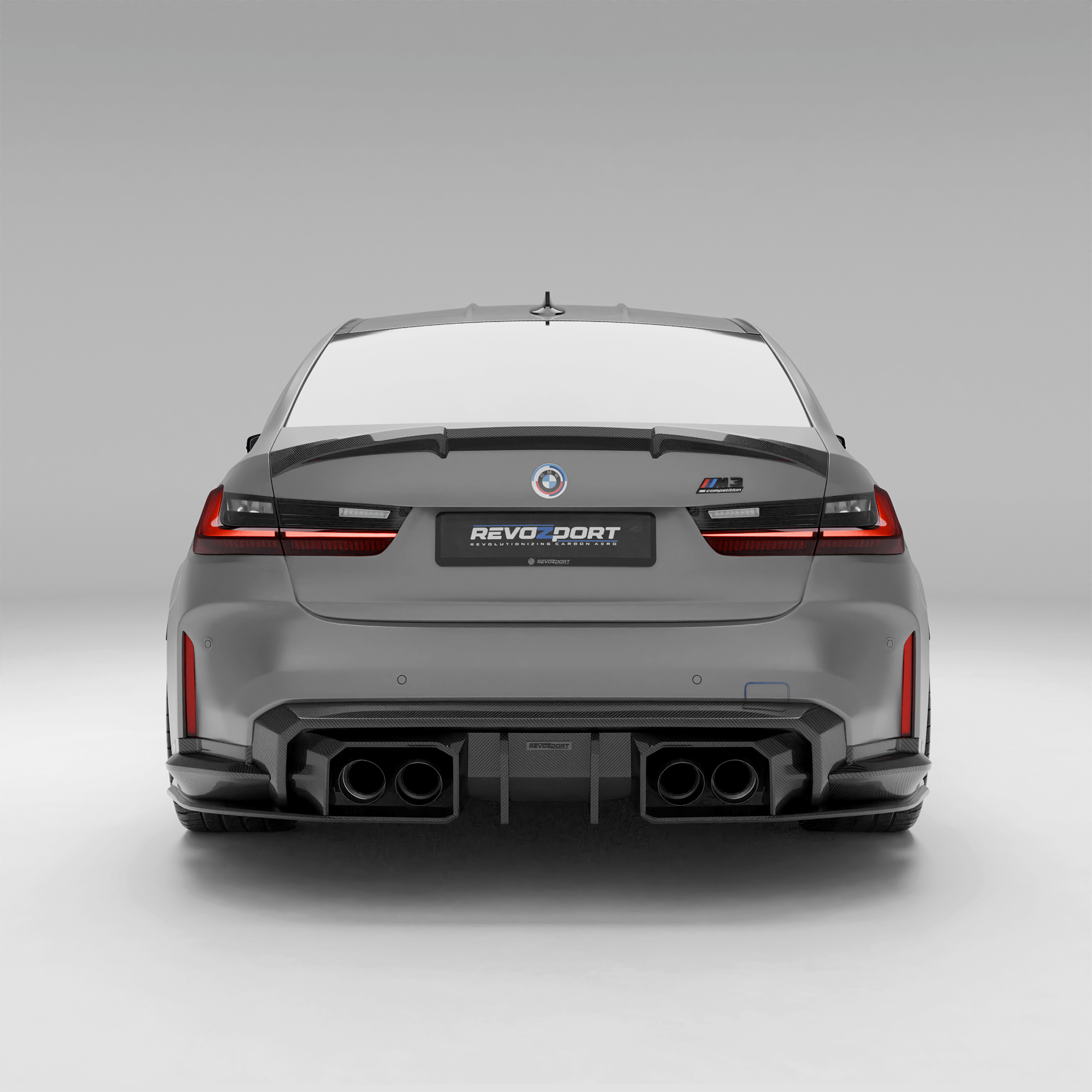


BMW M3 G80 Stainless Steel Tailpipe Tips
$425


BMW M2 G87 Carbon Fiber Front Lip
$939


0 comments